
What Is Cast Stone? Uses and Benefits in Mpumalanga
Cast stone gives you the look of natural stone with factory consistency. See how it is made, where it works best and how to choose it.
What Is Cast Stone? Uses and Benefits in Mpumalanga
Cast stone is a manufactured building material designed to look and feel like natural stone, and it has become a popular choice for driveways, garden paths, feature walls and boundary walls across Mpumalanga. If you have admired a neat cobbled driveway in White River or a stone-clad gate pillar in Mbombela, there is a good chance you were looking at cast stone. In this guide we explain what cast stone is, how it is made, where it works best and how to decide whether it suits your project.
What Is Cast Stone?
Cast stone, sometimes called reconstituted stone or architectural stone, is made from cement, carefully graded aggregates and colour pigments. The mix is poured or pressed into moulds and then cured until it is hard and ready to use. Because the moulds are modelled on natural stone, cobbles and cladding can carry the texture, edges and character of the real thing without the irregularity that comes with quarried rock.
The result is a material that gives you the look of stone with the predictability of a factory product. Every cobblestone or paver in a batch is made to the same size and thickness, which is what allows a surface to be laid evenly and neatly. When it is made locally, as it is here in the Lowveld, you can also visit, compare samples side by side and plan your colours before you order.
How Is Cast Stone Made?
The process is simple in principle, but the quality depends on the details.
Mixing. Cement, aggregates and pigment are batched in set proportions, so strength and colour stay consistent from one load to the next.
Casting or pressing. The mix is placed into moulds that give each piece its shape and surface texture.
Curing. The pieces are left to cure so they gain strength gradually. Rushed curing is one of the main reasons low-quality products crack or wear early.
Finishing and stacking. Pieces are checked, sorted and stacked on pallets, ready for collection or delivery.
When you compare suppliers, ask whether they make the product themselves and how it is cured. A manufacturer can answer those questions directly, which is a good sign of accountability.
Why Choose Cast Stone Over Natural Stone?
Natural stone is beautiful, but it varies widely in size, colour and thickness, and it has to be quarried, cut, sorted and transported before it reaches your site. The manufactured alternative solves several of those practical problems.
Consistent sizing. Uniform pieces lay faster and finish neater, which matters on large driveways and entrance areas.
One material for the whole project. Cobblestones, pavers, stepping stones, cladding and coping can all be sourced in matching colours, so your driveway, garden path and boundary wall look like they belong together.
Local supply. Stone made in the region does not have to travel far, and you can inspect it before you commit.
Choice of colour and finish. Pigments and textures let you match the style of your home, whether that is a modern face-brick house or a thatch lodge.
Value for money. It can work out more affordable than quarried or imported natural stone, although the final cost depends on the product, the area and the site conditions.
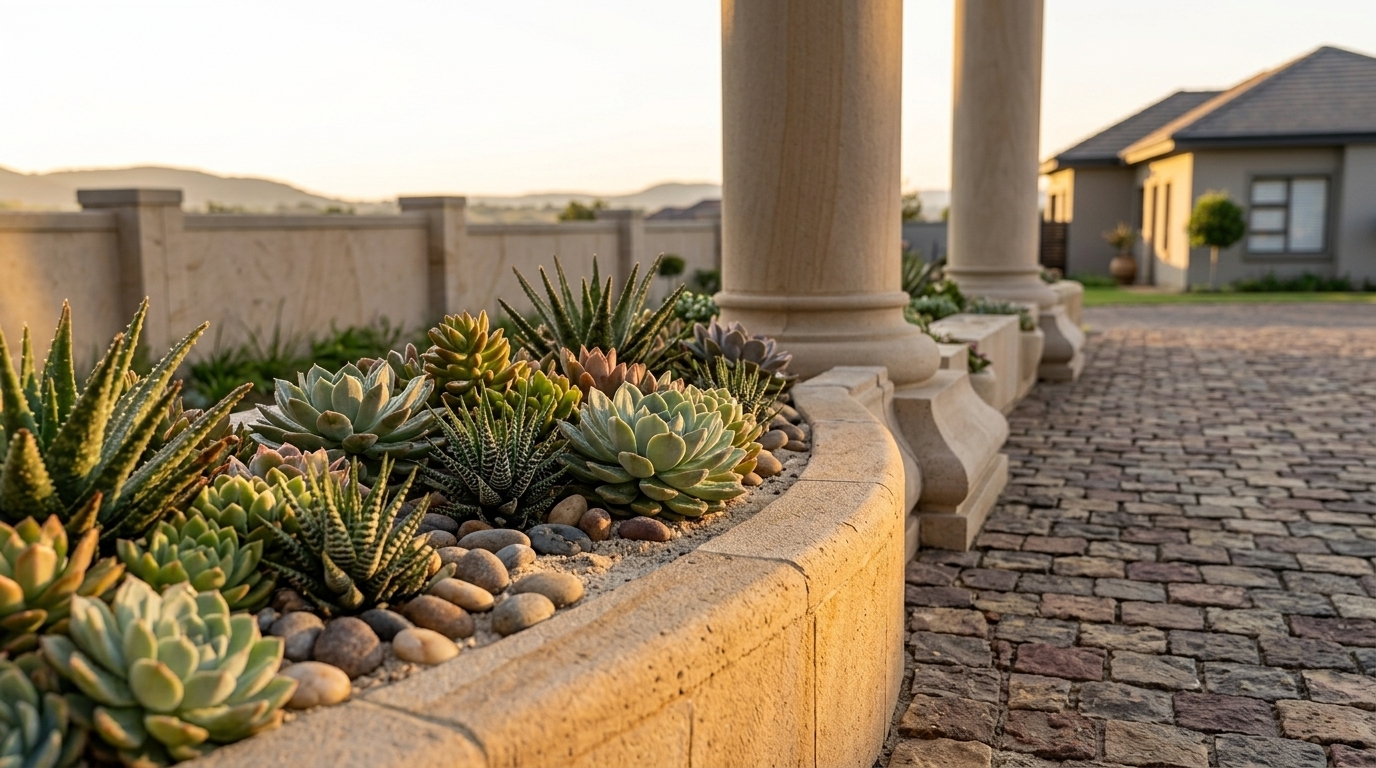
Cast Stone Products and Where They Are Used
This material is not one product but a family of them. Here is where each one fits best.
Cobblestones
Cobblestones give driveways, courtyards and entrance areas that classic, old-world look. Their small format makes it easy to follow curves, circles and borders, and they can be laid in patterns such as herringbone or stretcher bond.
Pavers
Pavers are the everyday workhorse for patios, pool surrounds, parking areas and walkways. They are available in larger formats than cobbles, so they cover ground quickly and suit modern, clean-lined designs.
Stepping stones
Stepping stones add a simple, practical path through gardens, lawns and around pools. They protect grass from foot traffic and make a garden easier to use after rain.
Wall cladding
Cladding is used to give a plain wall the look of stone. Popular spots include feature walls, gate pillars, entrance walls, braai areas and the base of boundary walls. It is far lighter and more manageable than building a full stone wall, but still delivers the textured look.
Wall coping
Coping is the cap that sits on top of a wall. Besides finishing the wall neatly, it sheds water away from the brickwork underneath, which helps protect the wall in heavy summer rain. It is a small detail that makes a big difference to how long a wall stays in good condition.
Does It Suit the Lowveld Climate?
The Lowveld has hot summers, strong UV and heavy afternoon thunderstorms, and any outdoor surface needs to handle all three. It performs well here when it is correctly made and correctly installed, but a few points are worth keeping in mind.
Drainage comes first. Paved areas should be laid with a slight fall so water runs away from the house and does not pool. Good drainage protects both the paving and the base underneath it.
Colour in strong sun. Pigmented products can soften slightly over many years of strong sunshine, as most outdoor materials do. Ask your supplier about colour fastness and whether sealing is recommended for your chosen product.
A solid base is essential. Heavy rain will quickly expose a poorly prepared base. We cover this in more detail below, because it is the single biggest factor in how long a paved surface lasts.
Cast Stone vs Concrete Pavers vs Clay Bricks
It helps to see how it compares with the other common options.
Plain concrete pavers are economical and strong, but they usually come in a limited range of shapes and looks. They are a sensible choice when budget is the main driver.
Clay brick pavers have a warm, traditional look and are long-lasting, but the colour range is narrower and the style is more fixed.
Cast stone sits between the two. It offers a natural-stone appearance, a wide range of products that match each other, and the consistency of a factory-made item.
None of these is automatically the best. The right choice depends on the look you want, how the area will be used and your budget.
Why Installation Matters as Much as the Product
Even the best stone will fail if it is laid badly. For paving and cobblestones, a durable result depends on:
A properly prepared sub-base that is compacted in layers.
A level bedding layer so each piece sits evenly.
Edge restraints that stop the paving spreading sideways under traffic.
Jointing sand brushed in and topped up so the pieces lock together.
Correct falls so rainwater drains away instead of sitting on the surface.
For cladding and coping, the details are different but just as important: correct adhesive, tidy joints, and coping that overhangs the wall slightly so water drips clear of the brickwork.
This is one of the main advantages of working with a company that supplies and installs. The people who make the product also understand how it behaves once it is in the ground.
Supply Only or Supply and Install?
Many customers want the product only. Builders, landscapers and people doing their own project often fall into this group, and buying directly from the manufacturer keeps the process simple. Others prefer to hand the whole job over, from measuring and base preparation to laying and finishing.
Neither option is wrong. If you are not sure, ask for a quote on both so you can compare the cost and decide how much of the work you want to manage yourself.
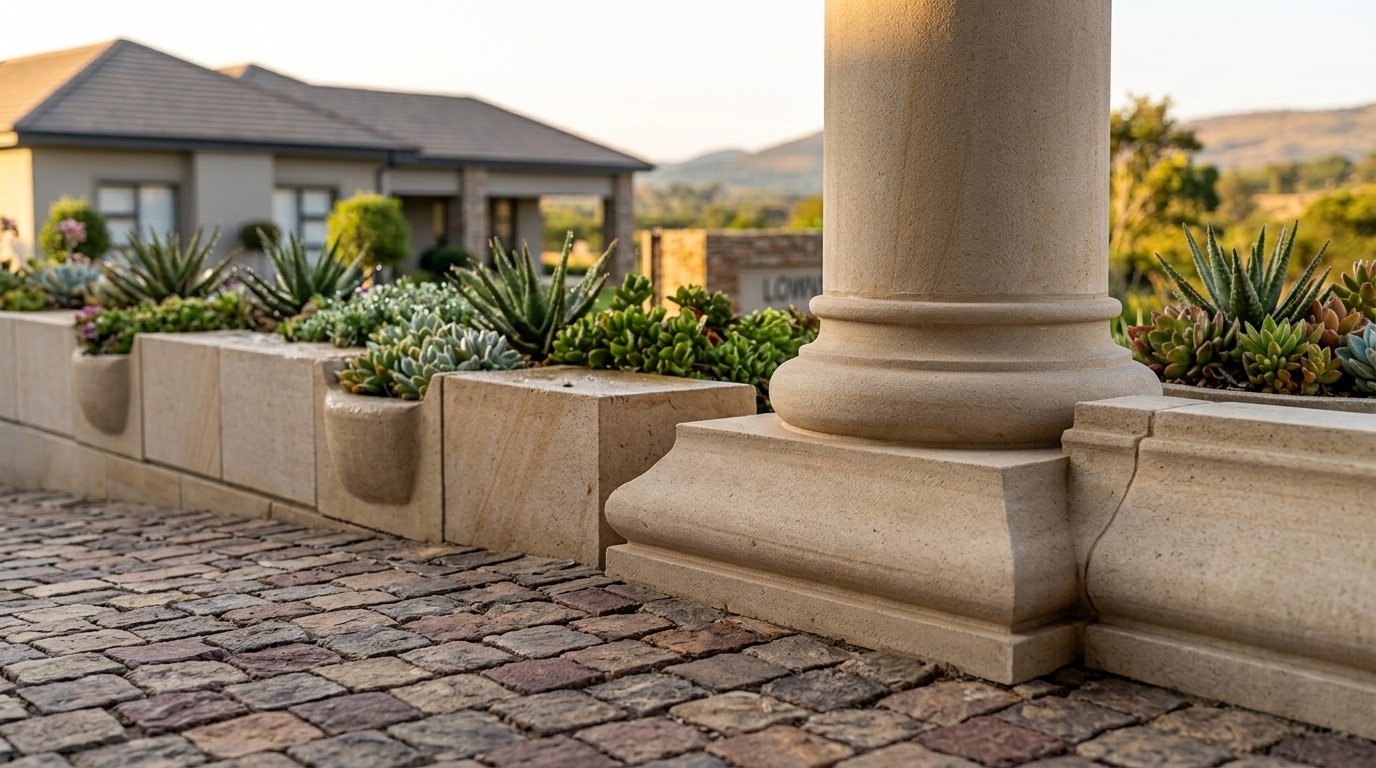
How to Choose the Right Product for Your Project
Before you request a quote, it helps to have answers to a few simple questions.
What is the area used for? A driveway that takes vehicles needs a different specification from a garden path.
How big is the area? Measure the length and width, or give a rough size, so quantities can be estimated.
What look do you want? Browse photos of completed projects and note the colours and patterns you like.
What is the surface like now? Existing concrete, bare soil and sloping ground all affect the preparation needed.
Do you need supply only or supply and install?
When do you need it done? Ask about lead times, especially for larger orders.
Cast Stone FAQ
Is cast stone durable? Yes, when it is properly manufactured, cured and installed. For paving, the quality of the base preparation is just as important as the product itself.
Is cast stone the same as concrete? It is made from similar raw materials, but it is produced with graded aggregates, pigments and moulds to achieve the look and finish of natural stone, rather than a plain grey concrete finish.
Can I use cast stone for a driveway? Yes, provided the product is suited to vehicle traffic and the base is prepared for the loads it will carry. Ask your supplier to confirm which products are recommended for driveways.
How much maintenance does it need? Very little. Regular sweeping, topping up the jointing sand between pavers and occasional cleaning are usually enough. Some owners choose to seal their paving to help keep the colour fresh.
Do you deliver and install outside Mbombela? Yes. Lowveld Cobble Pavers works in Mbombela (Nelspruit), White River, Hazyview, Barberton, Malelane, Komatipoort and Hoedspruit.
Get a Quote for Cast Stone in the Lowveld
Whether you are planning a new driveway, a pool deck, a garden path or a feature wall, the easiest next step is to talk to us about your project. Browse our cast stone cobblestones, pavers, wall cladding and wall coping, then request a free quote and we will help you choose the right product and the right installation approach for your site.